8
nights
340
km driving
12
challenges
3,150
XP to earn
8
nights
340
km driving
12
challenges
3,150
XP to earn
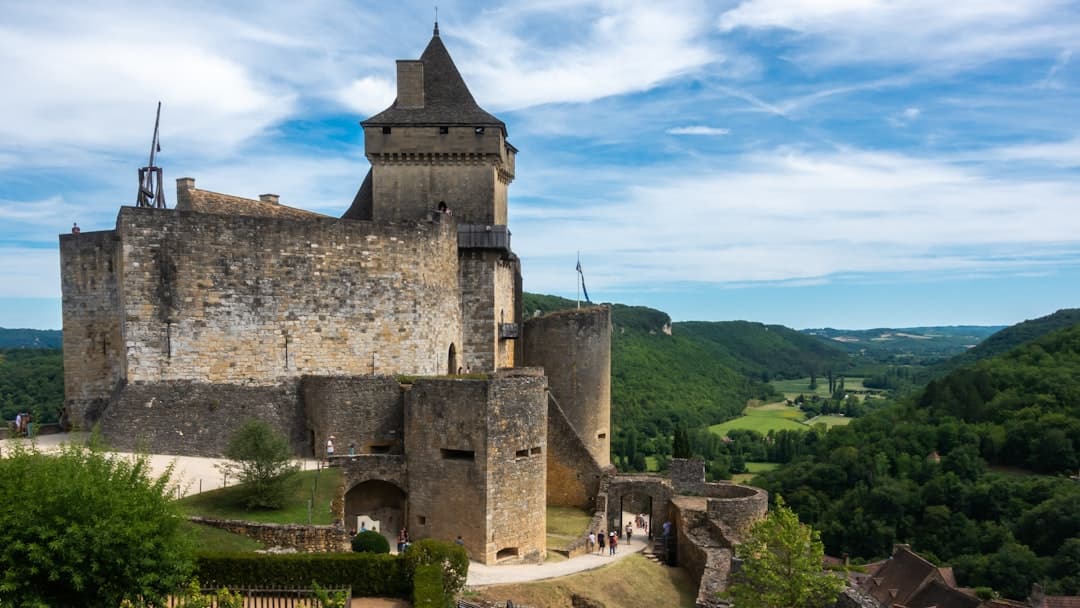
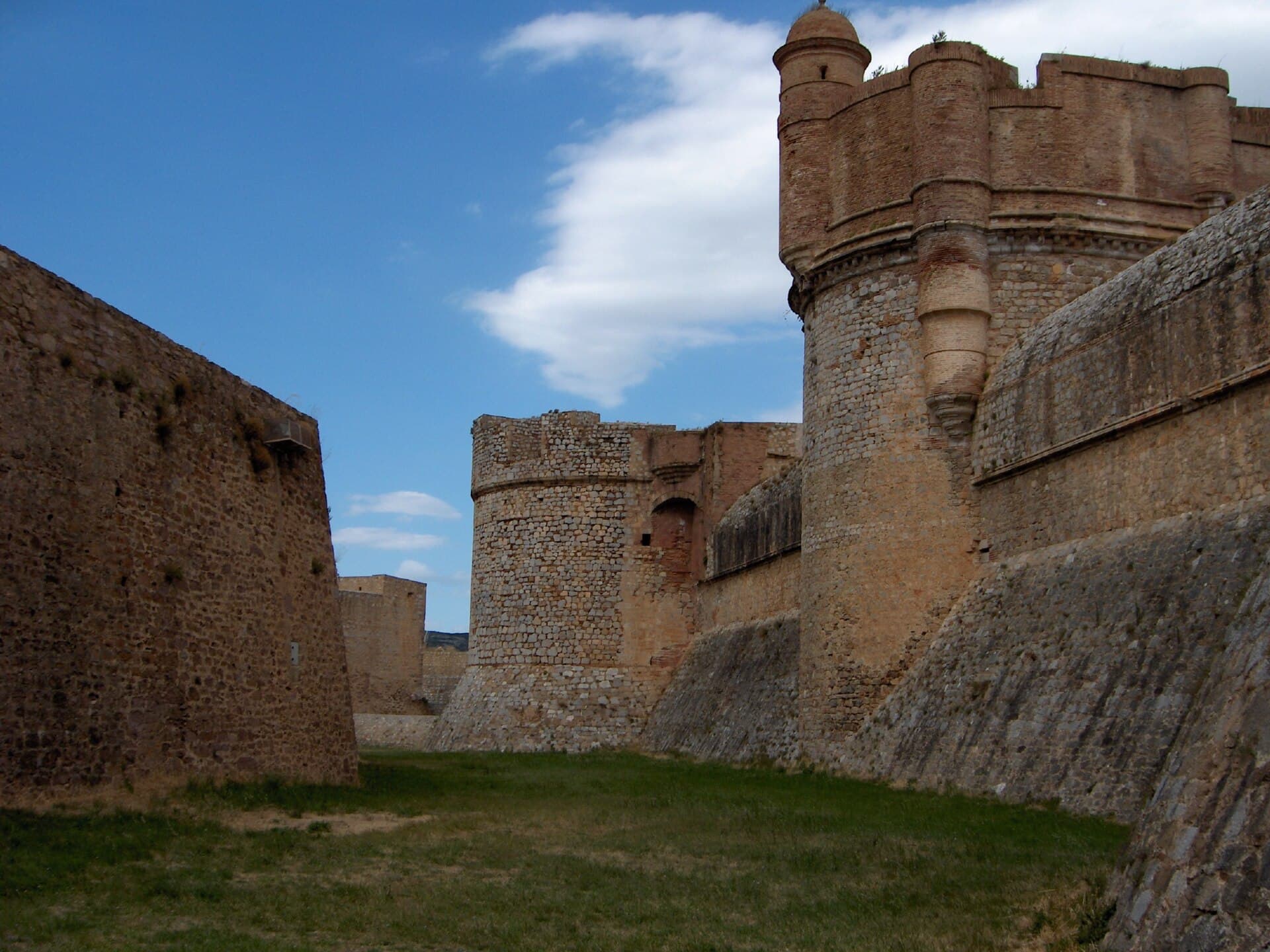
Eight nights from Carcassonne to Villefranche-de-Conflent. It opens at the Cité of Carcassonne, with the four castles of Lastours and the abbey of Lagrasse close by. Minerve, besieged by Simon de Montfort in 1210, stands above the gorges of the Cesse, and the abbey of Fontfroide lies in the Corbières. Then come the Corbières castles: Aguilar, Termes, Peyrepertuse and Quéribus, the last refuge of the Cathars after Montségur, all listed by UNESCO on 26 July 2026 among the royal fortresses of Languedoc. On the coast, Collioure is where Matisse and Derain began Fauvism in 1905, with Perpignan and the fortress of Salses inland. The trip ends in the Conflent below the Canigou, at Vauban's walled Villefranche and Fort Libéria.
Best from June to October
340 km of driving in total, about 6 hours over 8 days
Lastours: Four Cathar Castles on One Ridge
Edited by Kenneth Killeen
Days 1–2 · 2 nights
Carcassonne
10 km · 14 min from Carcassonne
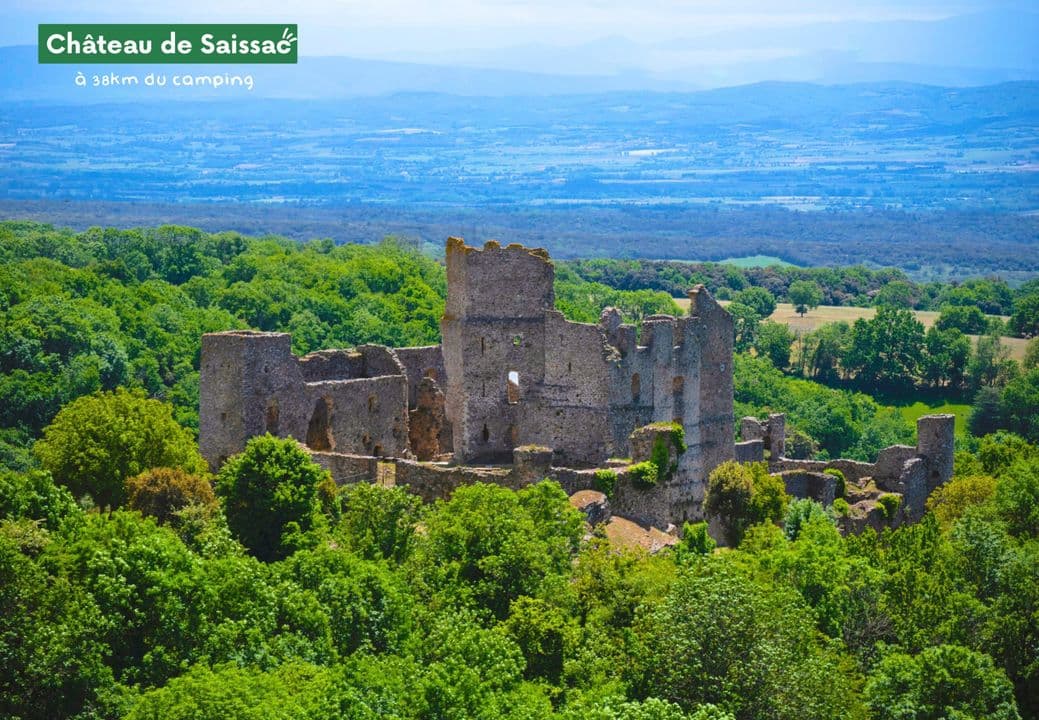
Base camp · 2 nights
Camping Clicochic - Commanderie
4.0
761 Google reviews
Editor's note
Two nights at Carcassonne. Walk the double ramparts and 52 towers of the Cité, tour the Château Comtal of the Trencavel viscounts and its wall-walk, see the Gothic stained glass of Saint-Nazaire, and eat cassoulet inside the walls. At Lastours, four castles line one rock spur 300m above the village. Cabaret, a Cathar centre, held out against Simon de Montfort and then Humbert de Beaujeu until 1229, and the king built the Tour Régine afterwards to make the point. Climb the ridge to all four. The abbey of Lagrasse enjoyed the protection of Charlemagne; canons live there again, and the medieval part is open to visit.
Carcassonne: The Cité, the Château Comtal and Cassoulet
200 XPWalk the full circuit of the lices, the corridor between the two walls, and work out where the 112 workers' houses stood that filled it in the 19th century when the towers were being used as garages and sheds and the walls were being quarried for stone — the demolition of the whole Cité was already scheduled when Jean-Pierre Cros-Mayrevieille stopped it
8.5 km from camp
About 5 h
Lastours: Four Cathar Castles on One Ridge
300 XPStart at the Belvédère, which needs no climb and puts all four castles in one view, then take the made path along the crest and reach them in their north-to-south order — Cabaret, the Tour Régine, Surdespine, Quertinheux — about two and a half hours on the ground
15.2 km from camp
About 4.5 h
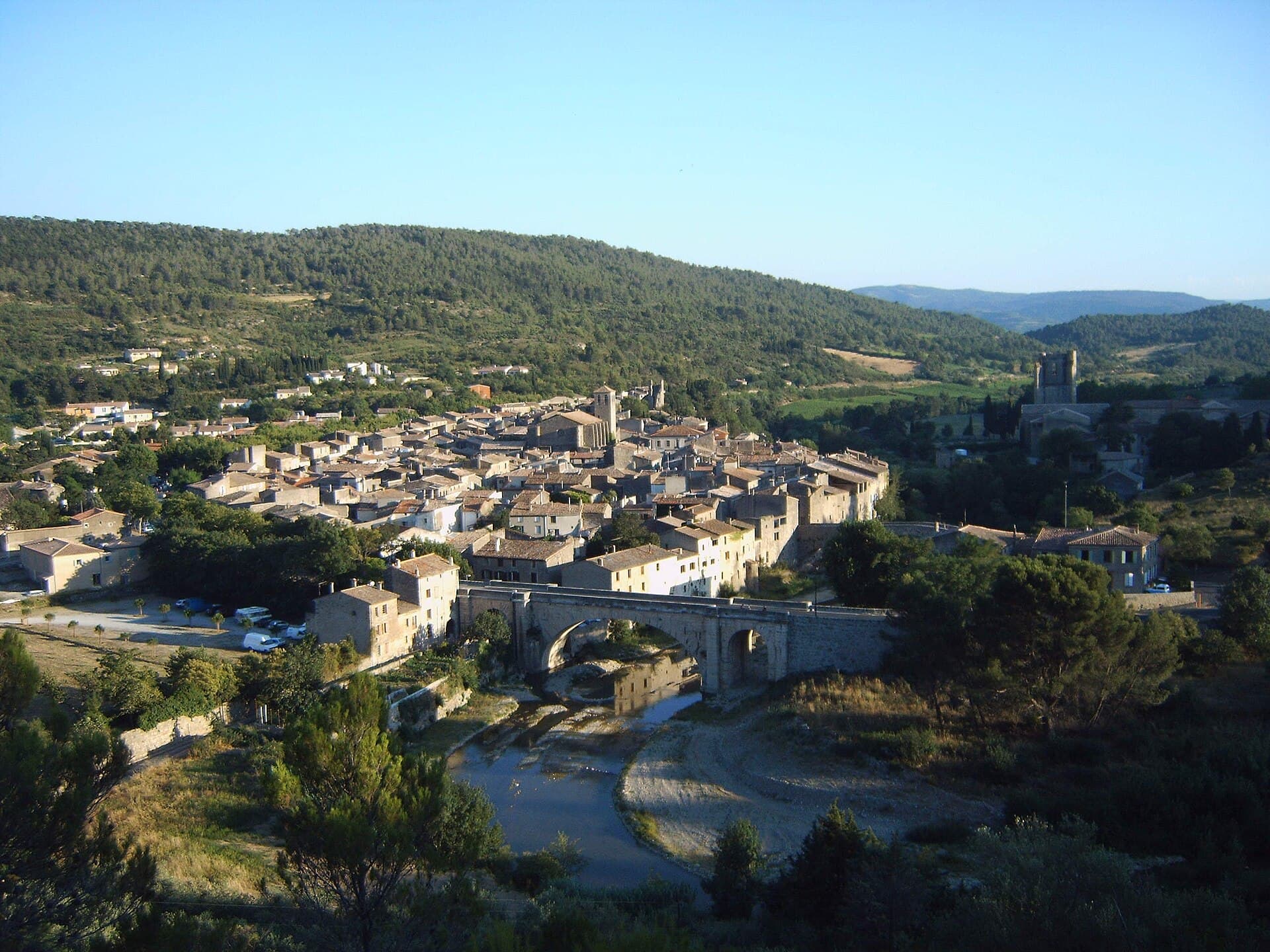
Lagrasse: The Abbey Under Charlemagne's Protection
200 XPFind the two separate doors into the same abbey — it was sold off in two lots at the Revolution and has never been put back together, so the medieval half belongs to the Aude department and the rest to a community of canons — then go into the public half for the private chapel abbot Auger de Gogenx had built in 1296, with its upper and lower chapels, and look at where the plain medieval masonry runs straight into the 18th-century classical work in flamed ochre sandstone
18.2 km from camp
About 3.5 h
Walks from camp
Day 3 · 1 night
The Minervois
28 km · 31 min from Carcassonne
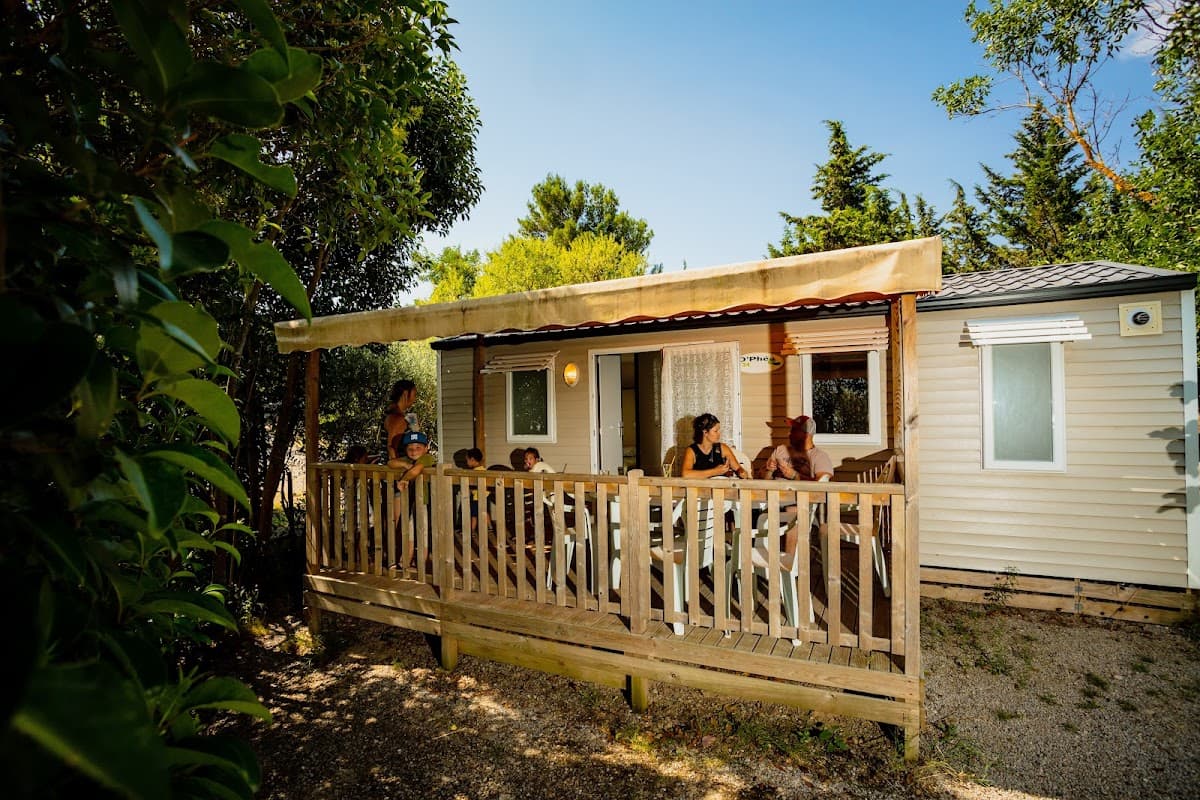
Base camp · 1 night
Camping la Pinède
4.4
454 Google reviews
Editor's note
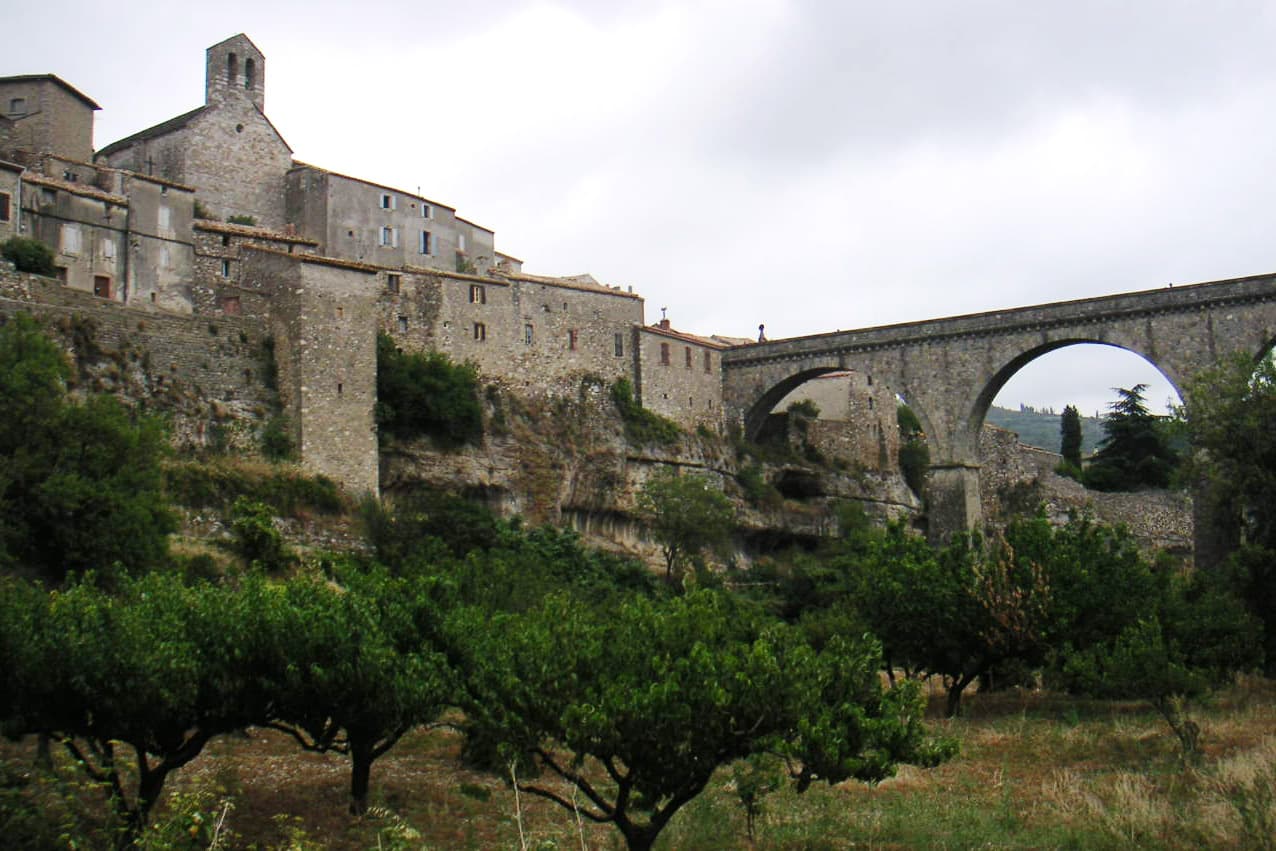
One night in the Minervois. Minerve stands on a spur where the gorges of the Cesse and the Brian meet. In 1210 Simon de Montfort besieged it for six weeks; his great trebuchet, the Malvoisine, broke its well, and after the surrender 140 Cathars who would not give up their faith were burned. Walk down to the natural bridges the Cesse has carved below the village, taste Minervois wine, and buy Lucques olives at Bize-Minervois. The abbey of Fontfroide, founded in 1093 and Cistercian from 1144–1145, has vaulted cloister galleries and walks in the Corbières hills around it.
Minerve and the Minervois: The Cathar Village of 1210, the Natural Bridges and the Olives of Bize
225 XPWalk down into the dry bed of the Cesse and go right through the Pont Grand, 228 m of natural tunnel, then carry on upstream to the 126 m Pont Petit
16.6 km from camp
About 3.5 h
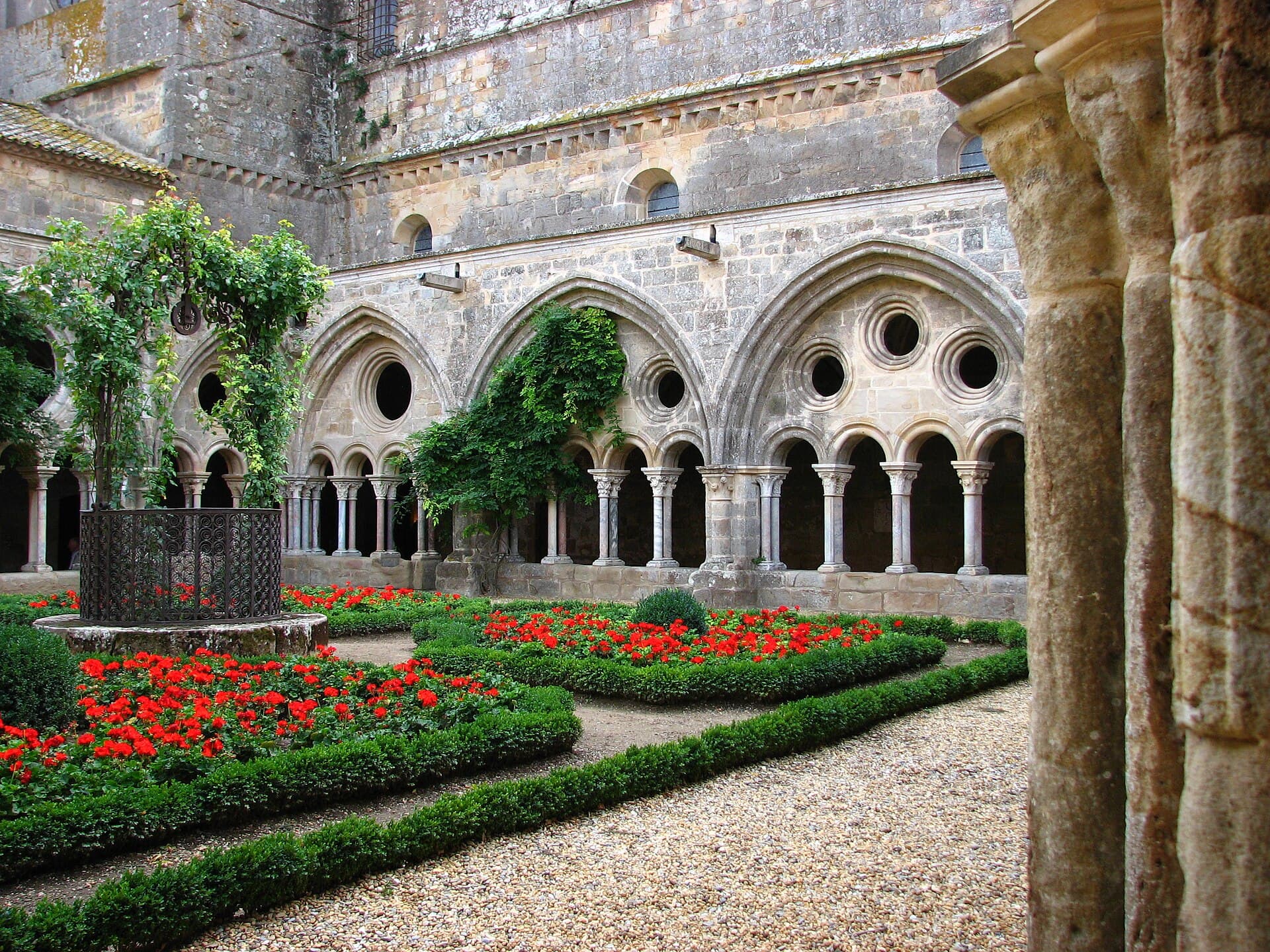
The Abbey of Fontfroide: A Cistercian Abbey in the Corbières
200 XPStand in the five bays of the nave, under a broken-barrel vault twenty metres up that the monks built first, against all Cistercian practice, as soon as the house joined Cîteaux — then look at the windows and notice what should not be there: the rule allowed only grisaille glass, and every window you see came out of the Fayets' own glassworks in 1913, with the five in the north aisle telling the life of Saint Francis of Assisi
14.7 km from camp
About 3.5 h
Walks from camp
Days 4–5 · 2 nights
The Corbières Castles
106 km · 2 h 2 min from The Minervois
Base camp · 2 nights
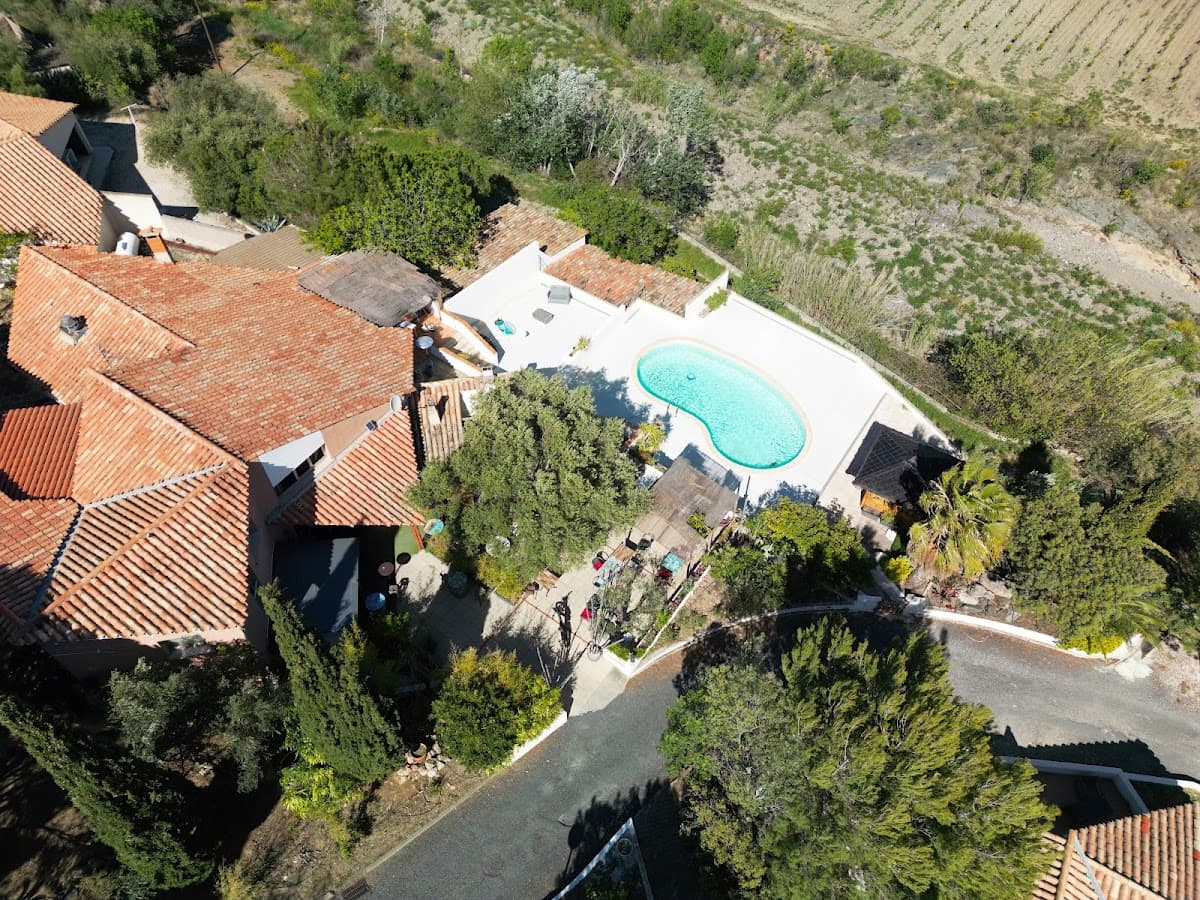
Le Relais d'Aguilar
4.3
295 Google reviews
Editor's note
Two nights among the Corbières castles. Peyrepertuse runs 300m along a ridge at about 800m; climb the Escalier de Saint-Louis, cut into the rock, to the Sant Jòrdi keep. Quéribus, at 728m, was the last refuge of the Cathars after Montségur and fell in 1255. In its keep a single pillar opens like a palm tree to carry the vault, and the top looks over the Roussillon plain, the Mediterranean and the Canigou. Walk up through the vines from Tuchan to Aguilar, whose royal outer wall has six semicircular towers. Termes held out for months in 1210, and its defenders finally gave in not to assault but to thirst.
Aguilar: The Royal Engineers' Ring Above the Vines
250 XPWalk the two kilometres east out of Tuchan and up the 96 m hill, and from the walls work out how much of the plain one man could keep an eye on: for all this stonework, the whole garrison in 1302 was the castellan, twelve sergeants, a porter, a single watchman and a chaplain
1.9 km from camp
About 2.5 h
Spring to autumn only
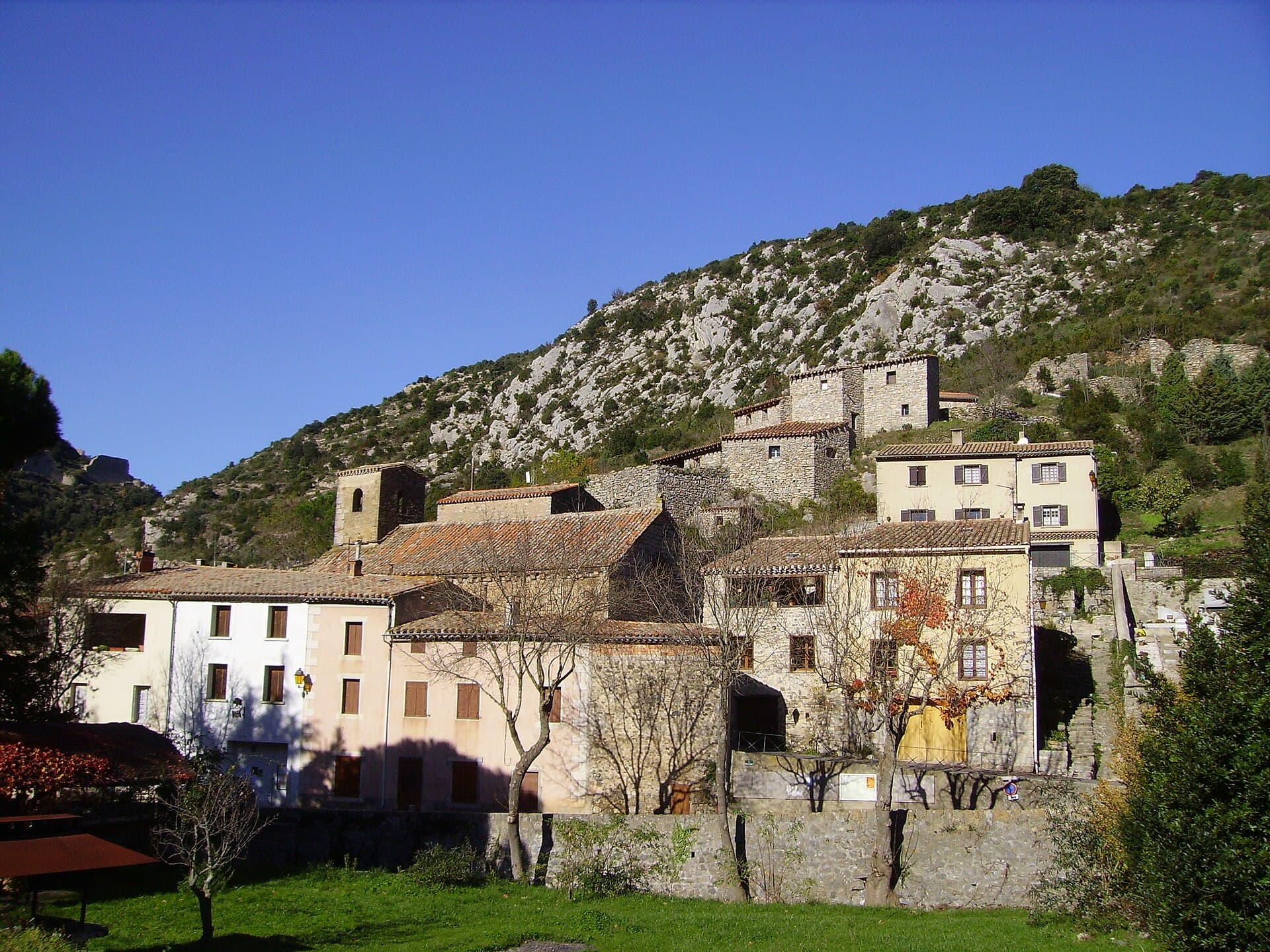
Termes: The Castle That Fell to Thirst in 1210
300 XPWalk up to the ruins on their spur and find the grand logis of the royal period, which was only dug out of the rubble in 2007 — then use the site's own panels to work out which walls belong to the lordship Montfort besieged and which to the royal garrison that came afterwards
18.6 km from camp
About 3 h
Spring to autumn only
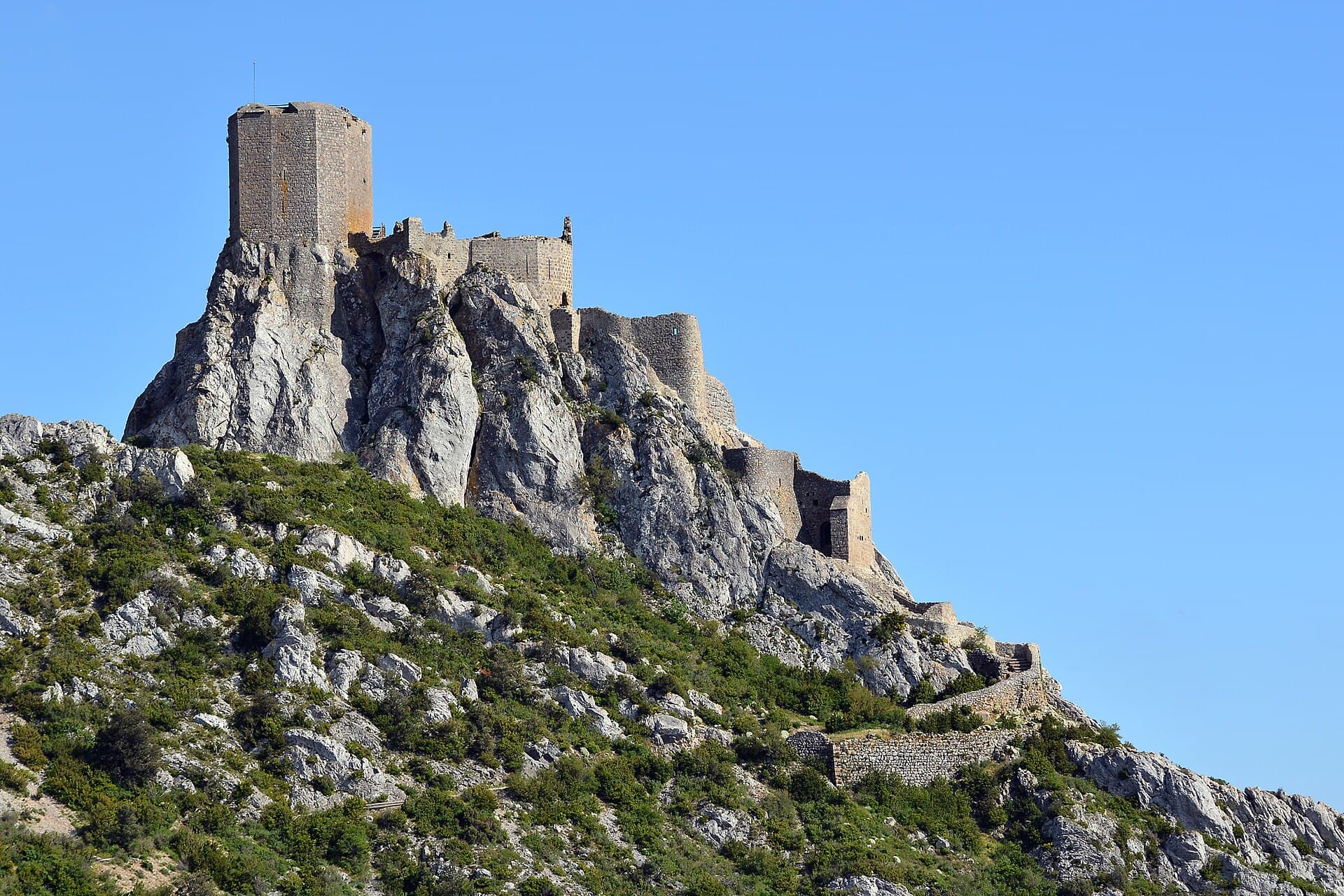
Peyrepertuse and Quéribus: The Castles in the Sky
300 XPClimb to Peyrepertuse and up the Escalier de Saint-Louis, the steep stair cut into the rock, to the Sant Jòrdi keep at the top of the ridge
13.9 km from camp
About 4.5 h
Walks from camp
Day 6 · 1 night
Collioure
112 km · 2 h 6 min from The Corbières Castles
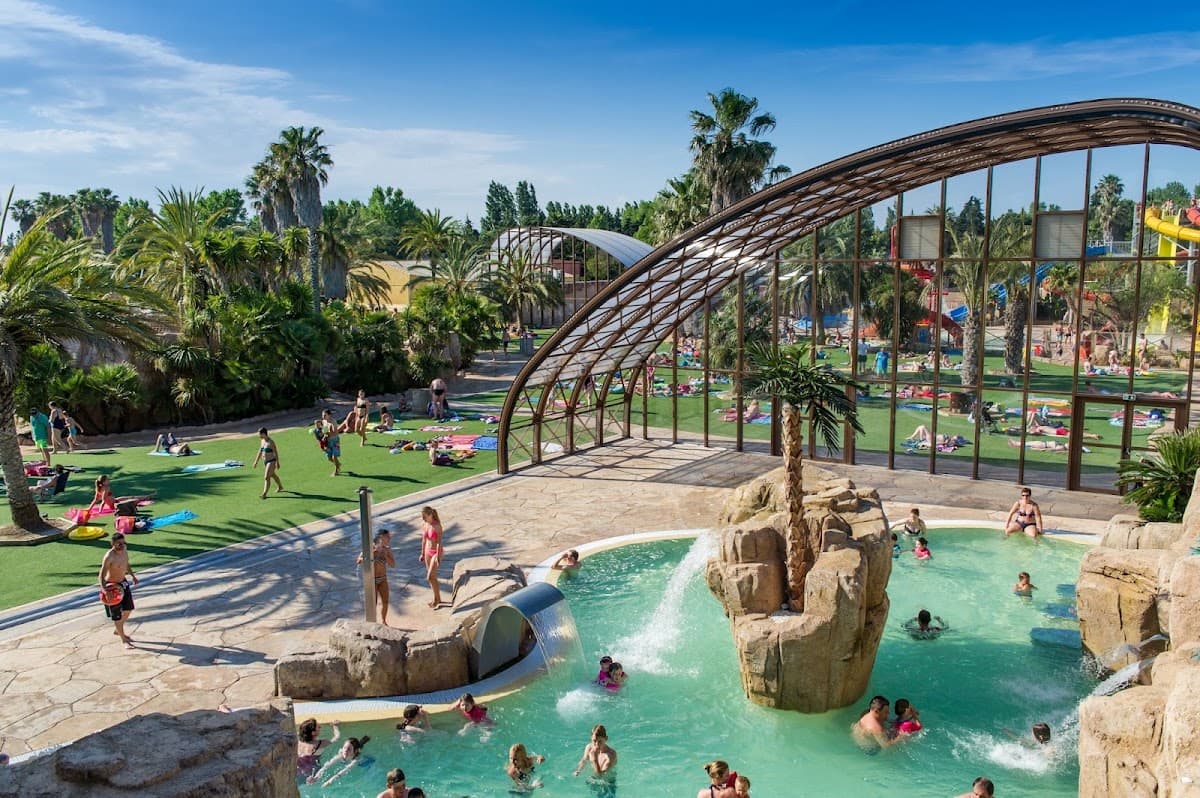
Base camp · 1 night
La Sirène
4.3
6,415 Google reviews
Editor's note
One night on the Roussillon coast. In the summer of 1905 Matisse and Derain painted Collioure's harbour in colours nobody had used before, and Fauvism was born; the Chemin du Fauvisme sets reproductions where they painted. Visit the Château Royal of the Kings of Majorca, reworked by Vauban, find the bell tower that was once the harbour lighthouse, and taste the town's salted anchovies. In Perpignan, mainland capital of the Kingdom of Majorca, visit the kings' Gothic palace and the Casa Pairal in the Castillet. Seventeen kilometres north, walk through the Fortress of Salses, built in 1497–1503 to guard the Spanish frontier.
Perpignan: The Kings of Majorca, the Castillet and the Campo Santo
250 XPWork round the three courtyards of the Palais des rois de Majorque naming what each wing did: the Palais Blanc to the west, probably the throne room; the Salle des Timbres to the north where the council met; the two stacked chapels to the east, Sainte-Madeleine below and Sainte-Croix above; and the Salle de Majorque to the south where the king held parliament and gave judgement. Look for the mudéjar decoration grafted onto the Gothic
17.5 km from camp
About 4 h
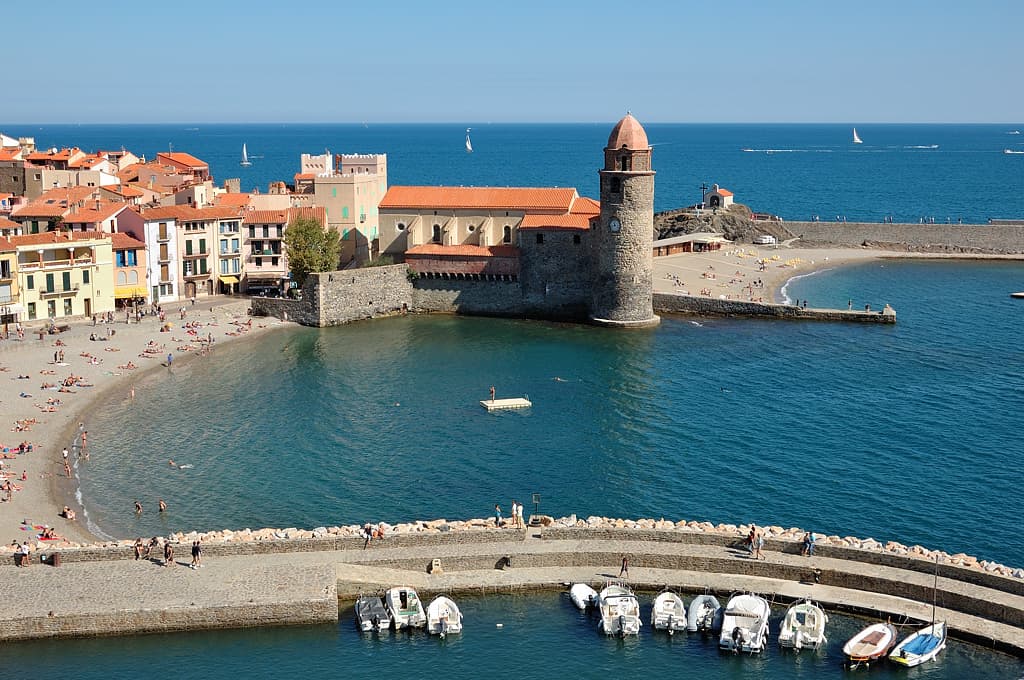
Collioure: Where Fauvism Began
225 XPFollow the Chemin du Fauvisme, the trail of reproductions of Matisse's and Derain's 1905 paintings set up where they painted them
6.8 km from camp
About 4 h
Walks from camp
Days 7–8 · 2 nights
The Conflent
79 km · 1 h 14 min from Collioure
Base camp · 2 nights
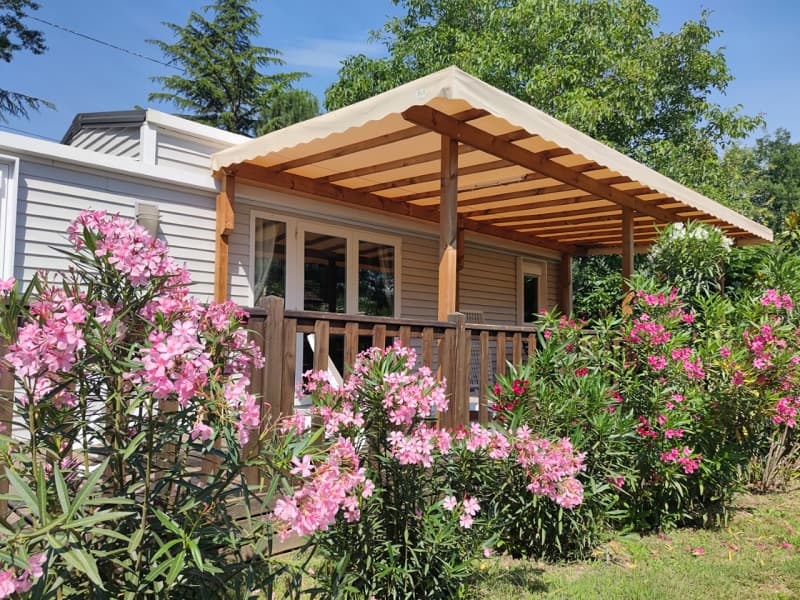
Camping l'Eau Vive
4.7
614 Google reviews
Editor's note
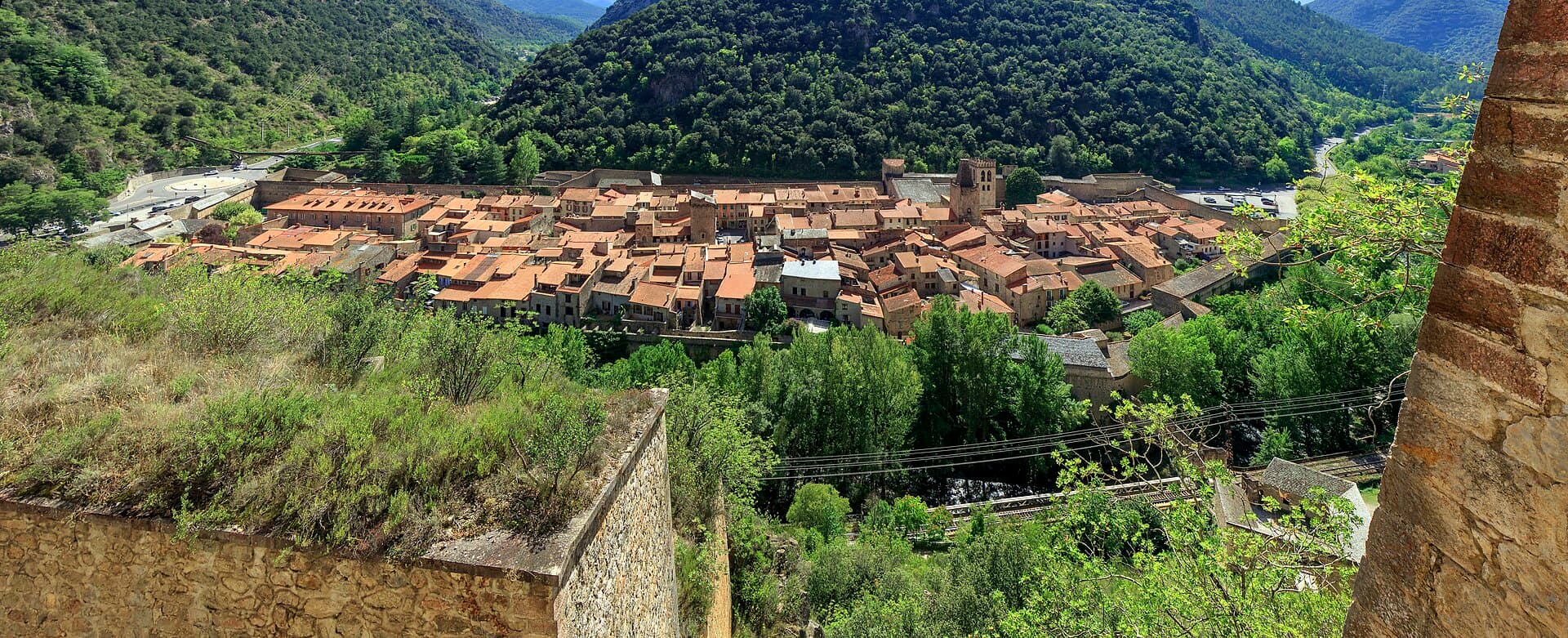
Two nights in the Conflent. Villefranche-de-Conflent keeps its 11th-century walls, raised by Vauban on two levels and roofed with slate; walk the covered walkway inside them, then climb the underground stair of about a thousand steps to Fort Libéria. Walk up to the abbey of Saint-Martin-du-Canigou, founded in 1009, with two churches built one on top of the other. The Canigou, 2,785m, is the sacred mountain of Catalan country, with an iron cross on the summit carried up by Perpignan scouts in 1943. On the night of 22 June hundreds climb it, and at daybreak groups come down with torches to light the Saint John's fires.
Villefranche-de-Conflent: Vauban's Walls, the Thousand Steps to Fort Libéria and Saint-Martin-du-Canigou
300 XPWalk the circuit of Vauban's walls at Villefranche and find all three parts of the UNESCO ensemble from the ground: the enceinte itself, Fort Libéria on the slope above, and the entrance to the Cova Bastera caves cut into the rock at the foot of the wall
3.6 km from camp
About 3 h
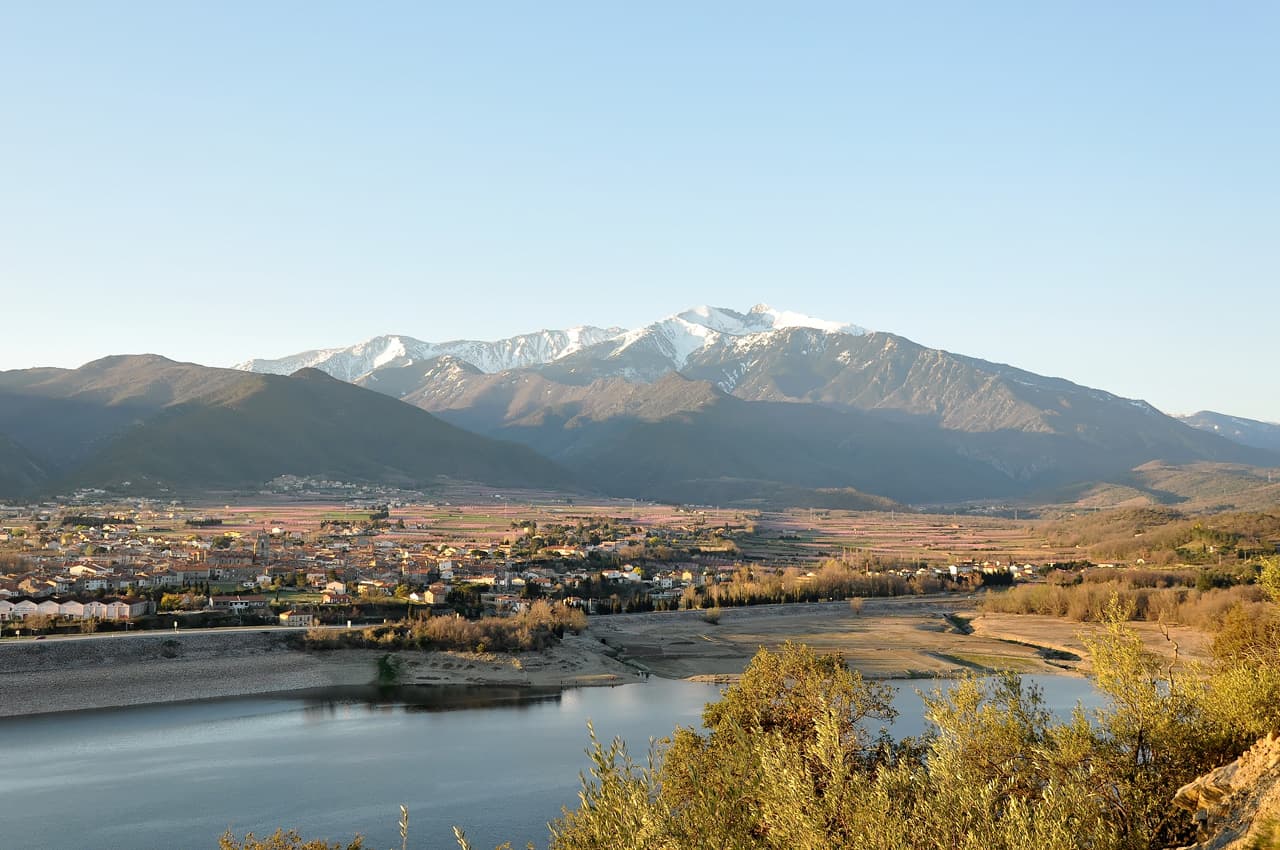
The Pic du Canigou: The Catalans' Sacred Mountain
400 XPPut a hand on the forged iron cross at 2,785 m and work out what it took to get it there: the Notre-Dame-la-Real scout troop of Perpignan carried it up from their meeting rooms in the town in 1943, in the middle of the occupation — and look at what it is bolted into, an orthogneiss that began as granite 425 million years ago and was cooked into its present state when the Pyrenees' ancestors were built
7.7 km from camp
About 9 h
Summer and autumn only
Walks from camp
Finish the guide, earn 3,150 XP
12 challenges across 5 stops.